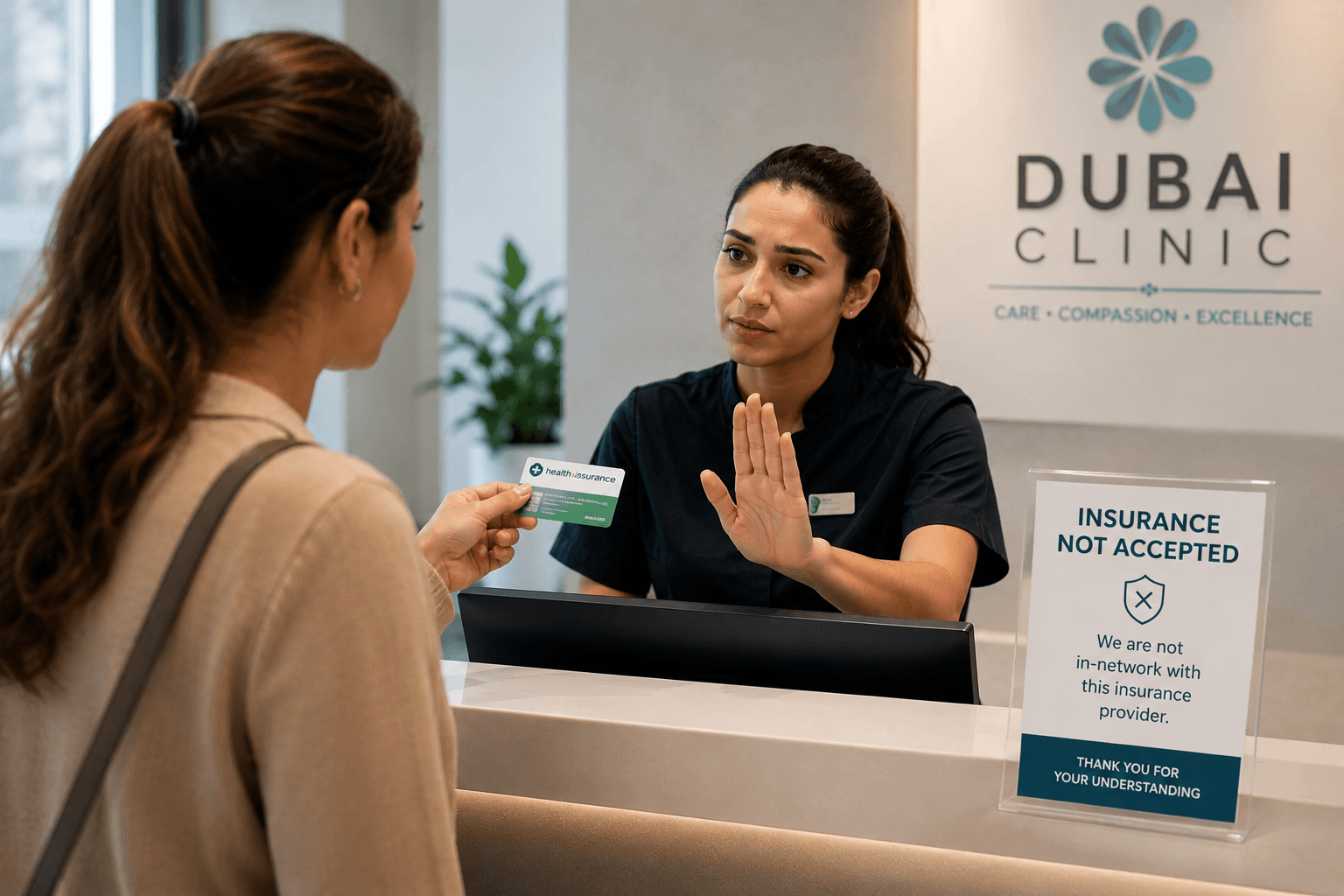

Why Dubai Clinics Reject Valid Health Insurance Cards
Living in Dubai offers an unparalleled lifestyle. Executives and entrepreneurs expect seamless services, from bespoke personal shopping to exclusive travel experiences. You naturally expect this same level of premium convenience from your medical providers. Yet presenting a valid health insurance card at a top-tier clinic only to be rejected can instantly shatter that expectation.
You invest heavily in comprehensive healthcare coverage. Therefore, dealing with administrative hurdles at the reception desk is both frustrating and entirely unnecessary. Many residents assume a premium insurance card acts as an all-access pass to every medical facility in the emirate. However, the regulatory environment governing medical claims operates under strict, often unseen protocols.
This guide clarifies the intricacies of the Dubai healthcare insurance landscape. We will examine the specific reasons premium clinics turn away valid insurance policies and outline steps you can take to prevent these disruptions. By understanding patient rights and the mechanics of direct billing, you can ensure your future medical visits remain sophisticated, private, and entirely stress-free.
Understanding the Dubai Healthcare Insurance Landscape
The Dubai Health Authority (DHA) mandates that every resident must possess health insurance. This universal requirement has created a massive, highly regulated market. Insurers categorise their coverage into distinct network tiers to manage this vast population.
When you purchase a policy, you are assigned a specific network tier. The most common tiers include the General Network (GN), the General Network Plus (GN+), and the Restricted Network (RN). High-net-worth individuals often opt for premium or comprehensive networks, which unlock access to VIP hospital wings and exclusive private clinics.
However, even elite types of plans operate within a rigid framework of pre-approvals and network agreements. A clinic does not merely check if your card is active. They must verify if your specific network tier aligns with their internal billing agreements. This exact intersection of network tiers and clinic agreements is where most unexpected rejections happen.
Primary Reasons for Insurance Rejection
Navigating a medical rejection requires knowing exactly what triggered the denial. Clinics and insurers typically deny claims based on a few recurring administrative or medical discrepancies.
Policy Exclusions and Limitations
Every insurance policy contains a list of exclusions. These are specific conditions or treatments that your insurer simply will not fund. In Dubai, common exclusions include cosmetic procedures, specific wellness therapies, and alternative medicine. Even if your doctor highly recommends a bespoke vitamin infusion to manage executive fatigue, your insurer will likely reject the claim if wellness therapies sit on the exclusion list.
Pre-existing Conditions and Waiting Periods
If you have recently switched insurance providers, you might be subject to a waiting period for pre-existing conditions. Many insurers enforce a six-month window where they will not cover ailments you had prior to signing the contract. If a clinic inputs a diagnostic code related to an undisclosed or newly covered pre-existing condition, the automated system will instantly reject the claim.
Network Restrictions and Out-of-Network Providers
Your premium card might look impressive, but it only works seamlessly within your assigned network. If you visit a specialist operating outside your insurer's approved network, the clinic will reject your card at the reception desk. While you can often claim the costs back later, the clinic cannot process the transaction through direct billing.
Administrative Errors and Expired Details
Convenience relies on flawless administration. A surprising number of insurance rejections stem from basic clerical errors. If your Emirates ID details do not perfectly match the data held by your insurer, the system blocks the transaction. Similarly, if your company's HR department delayed your policy renewal by just 24 hours, the clinic's portal will read your card as expired.
Specific Treatments Lacking Coverage
Sometimes the clinic accepts your card for the consultation, but the insurer rejects the actual treatment plan. Doctors must request pre-approval for complex diagnostics like MRI scans or specialist surgeries. If the insurer deems the requested procedure medically unnecessary, they will deny the coverage.
Clinic Billing Practices and Direct Billing Agreements
The difference between direct billing and reimbursement is crucial. Direct billing means the clinic sends the invoice straight to your insurer. Reimbursement means you pay the premium cost upfront and claim the money back later. If a boutique clinic ends its direct billing contract with your insurance provider, it will reject your card. You are still covered, but you must temporarily shoulder the financial outlay.
Patient Rights and Recourse
You possess distinct patient rights under the Dubai Health Authority. If an insurer denies a valid medical claim, you do not have to accept their initial decision. The DHA provides robust mechanisms to protect residents from unfair medical billing practices.
If a clinic rejects a critical treatment, you can demand a detailed written explanation from your insurance provider. Should the insurer fail to provide a satisfactory resolution, you can escalate the matter. The DHA operates an online platform called eClaimLink (IPAS), which monitors all insurance transactions. You can formally lodge insurance complaints through the DHA's official portals, prompting regulatory bodies to investigate the denial.
Tips for a Seamless Insurance Experience
Elite lifestyles are built on delegation and preparation. You can bypass the frustration of clinic rejections by adopting a few proactive habits.
First, ask your personal assistant or concierge to verify your exact network tier before booking a new specialist. A quick phone call to the clinic confirming they accept your specific network (such as GN+ or Premium) eliminates arrival-day surprises.
Second, thoroughly read your policy's table of benefits. Knowing your exact annual limits, pharmacy co-payments, and exclusion lists allows you to make informed decisions about bespoke healthcare services. Finally, maintain open communication with your medical provider. Premium clinics employ dedicated insurance coordinators who can secure pre-approvals days before your scheduled appointment, ensuring you bypass the waiting room entirely.
Before visiting a clinic in Dubai, it helps to verify whether your insurance is active, linked correctly, and accepted by the provider. This quick video shows how to check your insurance status step by step.
Many insurance rejections happen because patients assume their policy is active when the clinic system shows otherwise. Checking your status beforehand can save time and avoid unexpected bills.
Frequently Asked Questions
Why was my emergency treatment rejected at a private clinic?
True medical emergencies are strictly protected under DHA regulations, and clinics must stabilise patients regardless of coverage. However, insurers hold strict definitions of what constitutes an emergency.
Does a GN+ network guarantee approval everywhere?
No. While a GN+ (General Network Plus) offers broader access than a standard GN plan, it does not include every premium facility in Dubai. Elite private hospitals and boutique wellness centres often require comprehensive or VIP-tier networks.
How long does a pre-approval usually take in Dubai?
For standard procedures, insurers typically process pre-approvals within 24 to 48 hours. However, complex surgeries or high-cost diagnostic scans can take up to five working days.
Can I claim reimbursement if the clinic refused to bill directly?
Yes, provided the treatment itself is covered under your policy. If a clinic lacks a direct billing agreement with your insurer, you can pay upfront and submit the original invoices, medical reports, and a claim form to your provider for reimbursement.
Navigating Healthcare With Complete Confidence
Managing your health should never compromise your standard of living or waste your valuable time. By understanding the intricate layers of network tiers, billing agreements, and policy exclusions, you take absolute control of your healthcare journey.
Do not let administrative technicalities block your access to the elite medical care you deserve. Review your current health insurance policy today, familiarise yourself with your specific network tier, and keep your provider's concierge number saved on your device. When you understand the rules of Dubai's healthcare landscape, you guarantee yourself a truly seamless, premium medical experience.
Related Posts
Insurance for Freelancers in Dubai: Complete Guide
Freelance or self-employed in Dubai? Learn how health, liability, indemnity, and income protection insurance work for expats.
What Happens When Missed Health Insurance Renewal in Dubai?
Missed your health insurance renewal in Dubai? Learn about fines, visa issues, medical bills, grace periods, and what to do next.